LPN
IV Therapy
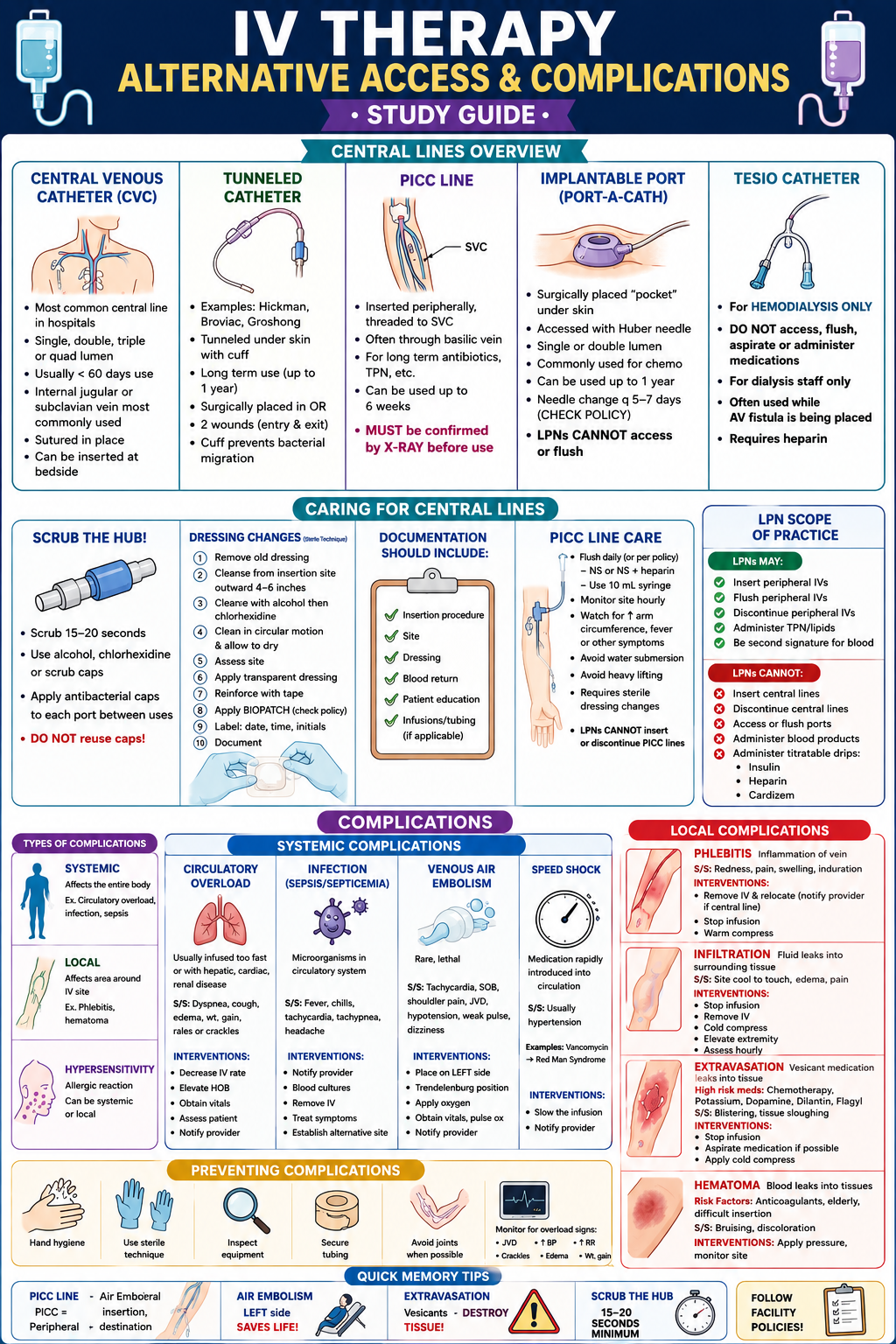
IV THERAPY
Alternative Access & Complications
Study Guide
Central Lines Overview
| Device | Key Facts | Common Uses |
|---|---|---|
| CVC | Short-term central line inserted into jugular/subclavian vein | Hospital IV therapy |
| Tunneled Catheter | Tunneled under skin with cuff barrier | Long-term therapy |
| PICC Line | Inserted in arm, threaded to SVC | Antibiotics, TPN |
| Implantable Port | Implanted under skin, accessed with Huber needle | Chemotherapy |
| Tesio Catheter | Dialysis catheter only | Hemodialysis |
Central Venous Catheter (CVC)
Key Points
- Short-term use (< 60 days)
- Single, double, triple, or quad lumen
- Inserted into:
- Internal jugular vein
- Subclavian vein
- Sutured in place
- Can be inserted bedside
Care
- Sterile dressing changes
- Flush daily/per policy
- Heparin flush may be used
Tunneled Catheters
Examples
- Hickman
- Broviac
- Groshong
Features
- Tunneled under skin
- Surgically placed in OR
- Long-term use (up to 1 year)
- Two surgical wounds:
- Entry site
- Exit site
- Cuff prevents bacterial migration
PICC Line
Features
- Peripheral insertion → Central destination
- Threaded to Superior Vena Cava (SVC)
- Often inserted through basilic vein
- Used for:
- Long-term antibiotics
- TPN
- Can remain for ~6 weeks
Important
MUST be confirmed by X-ray before use
PICC Care
- Flush daily/per policy
- Use 10 mL syringe ONLY
- Monitor:
- Site hourly
- Arm circumference
- Fever/infection
- Avoid:
- Heavy lifting
- Water submersion
LPN Restriction
- Cannot insert PICC
- Cannot discontinue PICC
Implantable Ports (Port-A-Cath)
Features
- Surgically implanted under skin
- Accessed with Huber needle
- Single or dual lumen
- Commonly used for chemotherapy
- Can remain for 1 year
Needle Change
- Every 5–7 days (check policy)
LPN Restriction
- Cannot access ports
- Cannot flush ports
Tesio Catheters
Important Rules
- Hemodialysis ONLY
- Dialysis staff ONLY
DO NOT:
- Access
- Flush
- Aspirate
- Administer medications
Caring for Central Lines
SCRUB THE HUB!
- Scrub 15–20 seconds
- Use:
- Alcohol
- Chlorhexidine
- Scrub caps
- Apply antibacterial caps
- NEVER reuse caps
Central Line Dressing Change Steps
- Remove old dressing
- Clean outward from insertion site (4–6 inches)
- Clean with alcohol then chlorhexidine
- Use circular motion
- Allow to dry
- Assess site
- Apply transparent dressing
- Reinforce with tape
- Apply BIOPATCH if policy allows
- Label:
- Date
- Time
- Initials
- Document
Documentation Must Include
- Insertion procedure
- Site condition
- Dressing condition
- Blood return
- Patient education
- Infusions/tubing
IV Therapy Complications
| Systemic | Local |
|---|---|
| Affect entire body | Affect IV site |
| Example: Sepsis | Example: Phlebitis |
Systemic Complications
Circulatory Overload
Causes
- IV infused too quickly
- Cardiac disease
- Renal disease
- Hepatic disease
Signs/Symptoms
- Dyspnea
- Cough
- Crackles
- Edema
- Weight gain
Interventions
- Slow IV rate
- Elevate HOB
- Obtain vitals
- Notify provider
Infection / Sepsis
Signs/Symptoms
- Fever
- Chills
- Tachycardia
- Tachypnea
- Headache
Causes
- IV contamination
- Break in sterile technique
Interventions
- Notify provider
- Blood cultures
- Remove IV
- Treat symptoms
- Establish new IV site
Venous Air Embolism
Danger
Air blocks blood flow to pulmonary artery.
Signs/Symptoms
- Tachycardia
- SOB
- Shoulder pain
- JVD
- Hypotension
- Weak pulse
- Dizziness
Emergency Interventions
- Place patient on LEFT side
- Trendelenburg position
- Apply oxygen
- Obtain vitals
- Notify provider
Speed Shock
Cause
Medication infused too rapidly
Example
- Vancomycin → Red Man Syndrome
Interventions
- Slow infusion
- Notify provider
Local Complications
Phlebitis
Signs
- Redness
- Pain
- Swelling
- Induration
Interventions
- Remove IV
- Warm compress
- Restart IV elsewhere
Infiltration
Definition
IV fluid leaks into tissue
Signs
- Cool skin
- Edema
- Pain
Interventions
- Stop infusion
- Remove IV
- Cold compress
- Elevate extremity
Extravasation
Definition
Vesicant medication leaks into tissue
High-Risk Medications
- Chemotherapy
- Potassium
- Dopamine
- Dilantin
- Flagyl
Signs
- Blistering
- Tissue sloughing
Interventions
- Stop infusion
- Aspirate medication if possible
- Apply cold compress
Hematoma
Definition
Blood leaks into tissue
Risk Factors
- Anticoagulants
- Elderly patients
- Difficult IV insertion
Signs
- Bruising
- Discoloration
Preventing Complications
- Hand hygiene
- Sterile technique
- Inspect equipment
- Secure tubing
- Avoid joints when possible
- Monitor for overload:
- JVD
- Elevated BP
- Crackles
- Edema
- Weight gain
LPN Scope of Practice
LPNs MAY:
- Insert peripheral IVs
- Flush peripheral IVs
- Discontinue peripheral IVs
- Administer TPN/lipids
- Be second signature for blood
LPNs CANNOT:
- Insert/discontinue central lines
- Access or flush ports
- Administer blood products
- Administer titratable drips:
- Insulin
- Heparin
- Cardizem
Quick Memory Tips
| Topic | Memory Aid |
|---|---|
| PICC Line | “Peripheral insertion, Central destination” |
| Air Embolism | “LEFT side saves life” |
| Extravasation | “Vesicants destroy tissue” |
| Scrub the Hub | Minimum 15–20 seconds |
Ready to Go Deeper?
This is just a sample of what Allied Mastery offers. Sign up to unlock our full library, create custom quizzes, track your performance, and more.