LPN
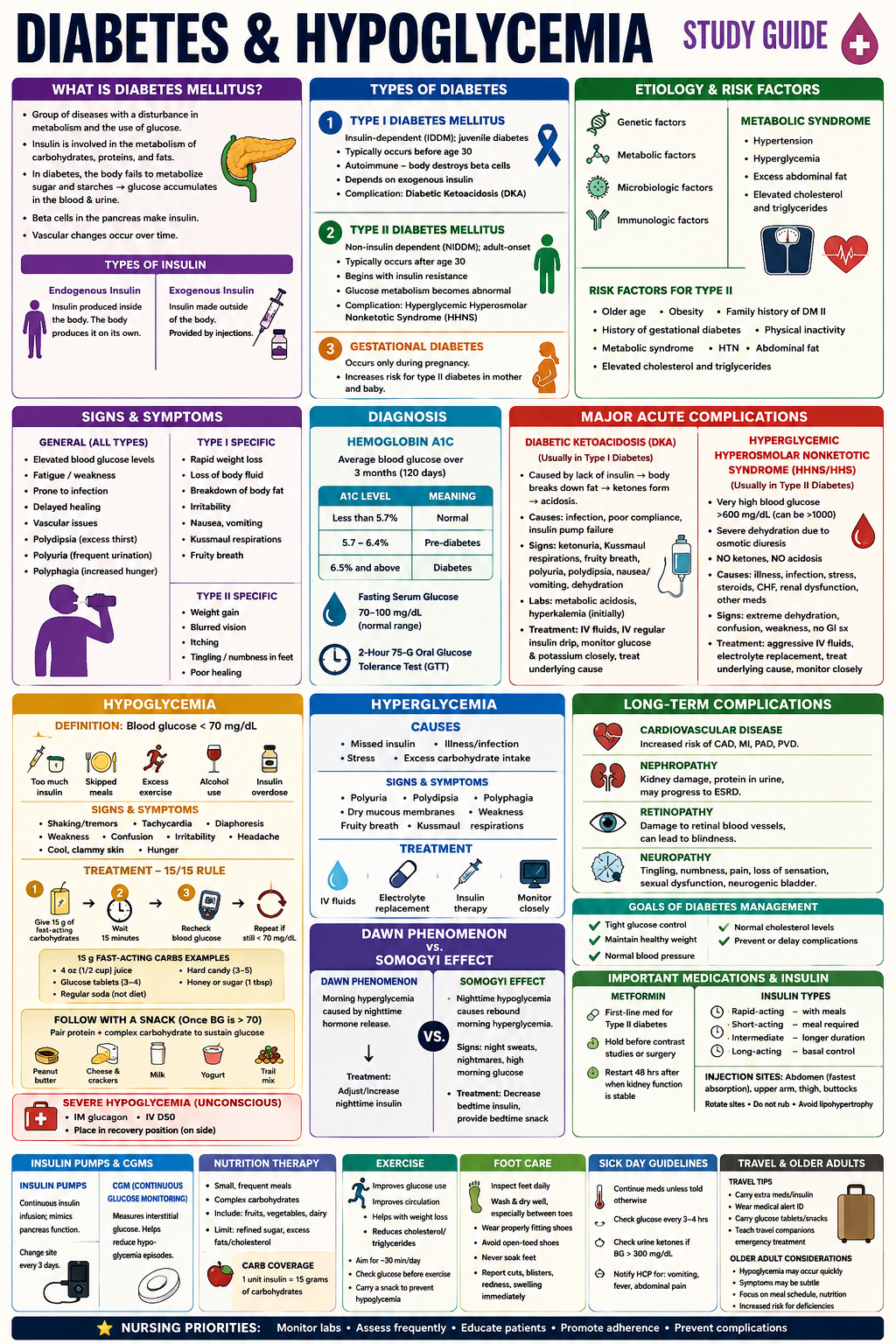
Diabetes & Hypoglycemia Study Guide
Diabetes & Hypoglycemia Study Guide
Diabetes Mellitus (DM)
Definition
Diabetes Mellitus is a group of diseases involving impaired glucose metabolism due to problems with insulin production or insulin use.
Important Concepts
Insulin regulates:
- Carbohydrates
- Proteins
- Fats
In diabetes:
- Glucose builds up in blood and urine
- Cells cannot properly use glucose for energy
- Beta cells in the pancreas produce insulin
- Long-term vascular damage occurs over time
Types of Insulin
- Endogenous insulin = made by the body
- Exogenous insulin = injected insulin
Types of Diabetes
Type 1 Diabetes Mellitus
Characteristics
- Insulin-dependent (IDDM)
- Usually develops before age 30
- Autoimmune destruction of beta cells
- Requires lifelong insulin
Major Complication
- Diabetic Ketoacidosis (DKA)
Signs & Symptoms
- Polyuria
- Polydipsia
- Polyphagia
- Rapid weight loss
- Weakness/fatigue
- Nausea/vomiting
Type 2 Diabetes Mellitus
Characteristics
- Non-insulin dependent (NIDDM)
- Usually develops after age 30
- Insulin resistance
- Increasing in children/adolescents
Risk Factors
- Obesity
- Older age
- Family history
- Physical inactivity
- Hypertension
- Metabolic syndrome
- Gestational diabetes history
Signs & Symptoms
- Weight gain
- Fatigue
- Blurred vision
- Poor wound healing
- Tingling/numbness in feet
- Polyuria, polydipsia, polyphagia
Major Complication
- HHS / HHNS
Gestational Diabetes
Key Points
- Occurs during pregnancy
- May require diet, oral meds, or insulin
- Increases future risk of Type 2 diabetes
Diagnosis of Diabetes
Hemoglobin A1C
| Level | Meaning |
|---|---|
| < 5.7% | Normal |
| 5.7–6.4% | Prediabetes |
| ≥ 6.5% | Diabetes |
- Reflects ~3-month average glucose
Fasting Blood Glucose
- 70–100 mg/dL (normal)
Diabetic Ketoacidosis (DKA)
Cause
Lack of insulin → fat breakdown → ketones
Common Causes
- Infection
- Missed insulin
- Pump failure
Signs & Symptoms
- Ketonuria
- Fruity breath
- Kussmaul respirations
- Polyuria
- Polydipsia
- Nausea/vomiting
- Dehydration
Potassium Changes
- Initial: Hyperkalemia
- Treatment phase: Hypokalemia
Treatment
- IV fluids (NS/LR)
- IV insulin drip
- Cardiac monitoring
- Monitor glucose + potassium
Hyperosmolar Hyperglycemic State (HHS)
Key Features
- Type 2 diabetes
- Glucose > 600 mg/dL
- Severe dehydration
- No ketones
- No acidosis
Causes
- Infection
- Illness
- Stress
- Steroids
- CHF
- Renal disease
Treatment
- Aggressive IV fluids
- Electrolytes
- Cardiac monitoring
- Treat underlying cause
Hypoglycemia
Definition
Blood glucose < 70 mg/dL
Causes
- Too much insulin
- Skipped meals
- Exercise
- Alcohol
- Insulin overdose
Signs & Symptoms
- Tremors
- Tachycardia
- Sweating
- Weakness
- Confusion
- Cool, clammy skin
- Headache
Treatment (15/15 Rule)
- Give 15 g fast carbs
- Wait 15 minutes
- Recheck glucose
- Repeat if needed
Fast Carbs
- Juice (4 oz)
- Glucose tabs
- Regular soda
- Hard candy
- Sugar/honey
Follow-up snack
- Peanut butter
- Cheese
- Milk
Severe Hypoglycemia
If unconscious:
- IM glucagon
- IV D50
- Side-lying position
Hyperglycemia
Causes
- Missed insulin
- Infection
- Stress
- High carbs
Signs & Symptoms
- Polyuria
- Polydipsia
- Polyphagia
- Dry mouth
- Weakness
- Fruity breath
- Kussmaul respirations
Treatment
- IV fluids
- Electrolytes
- Insulin
Dawn Phenomenon vs Somogyi Effect
Dawn Phenomenon
- Morning hyperglycemia from hormones
Treatment: increase nighttime insulin
Somogyi Effect
- Night hypoglycemia → rebound hyperglycemia
Symptoms:
- Nightmares
- Night sweats
- High morning glucose
Treatment:
- Reduce nighttime insulin
- Add bedtime snack
Long-Term Complications
Cardiovascular
- CAD
- PAD
- MI
- PVD
Nephropathy
- Kidney damage
- Proteinuria
- Possible ESRD
Retinopathy
- Vision loss
- Retinal damage
Neuropathy
- Numbness/tingling
- Pain
- Sexual dysfunction
- Neurogenic bladder
Diabetes Management
Goals
- Control glucose
- Maintain healthy weight
- Prevent complications
Medications
Metformin
- First-line for Type 2
- Hold before contrast/surgery
- Restart after 48 hrs if kidneys stable
Insulin Types
| Type | Key Point |
|---|---|
| Rapid | With meals |
| Short | Meal required |
| Intermediate | Longer acting |
| Long | Basal insulin |
Injection Sites
- Abdomen (fastest)
- Upper arm
- Thigh
- Buttocks
Important:
- Rotate sites
- Do not massage injection site
- Prevent lipohypertrophy
Insulin Pumps & CGM
Insulin Pump
- Continuous insulin delivery
- Mimics pancreas
- Change site every 3 days
CGM
- Continuous glucose monitoring
- Interstitial glucose readings
Nutrition
Guidelines
- Small frequent meals
- Complex carbs
Include
- Fruits
- Vegetables
- Dairy
Limit
- Sugar
- Fat/cholesterol
Carb Ratio
- 1 unit insulin ≈ 15g carbs
Exercise
Benefits
- Improves glucose use
- Improves circulation
- Weight loss
- Improves lipids
Recommendations
- 30 min/day
- Check glucose before exercise
- Carry snack
Foot Care
- Inspect daily
- Dry between toes
- Proper footwear
- No open-toed shoes
- Never soak feet
- Report wounds early
Sick Day Rules
- Continue meds unless instructed
- Check glucose q3–4 hrs
- Check ketones if glucose > 300
- Report vomiting/fever/pain
Travel Tips
- Carry extra meds
- Wear medical ID
- Carry glucose snacks
- Teach companion emergency care
Older Adult Considerations
- Hypoglycemia may be sudden
- Symptoms may be subtle
- Focus on regular meals
- Higher risk of malnutrition
Nursing Priorities
DKA
- Fluids
- Insulin drip
- Potassium monitoring
HHS
- Dehydration management
- Cardiac monitoring
Hypoglycemia
- 15/15 rule
- Recheck glucose
Foot Care
- Prevent amputations
Education
- Med adherence
- Diet
- Exercise
- Monitoring
Ready to Go Deeper?
This is just a sample of what Allied Mastery offers. Sign up to unlock our full library, create custom quizzes, track your performance, and more.