LPN
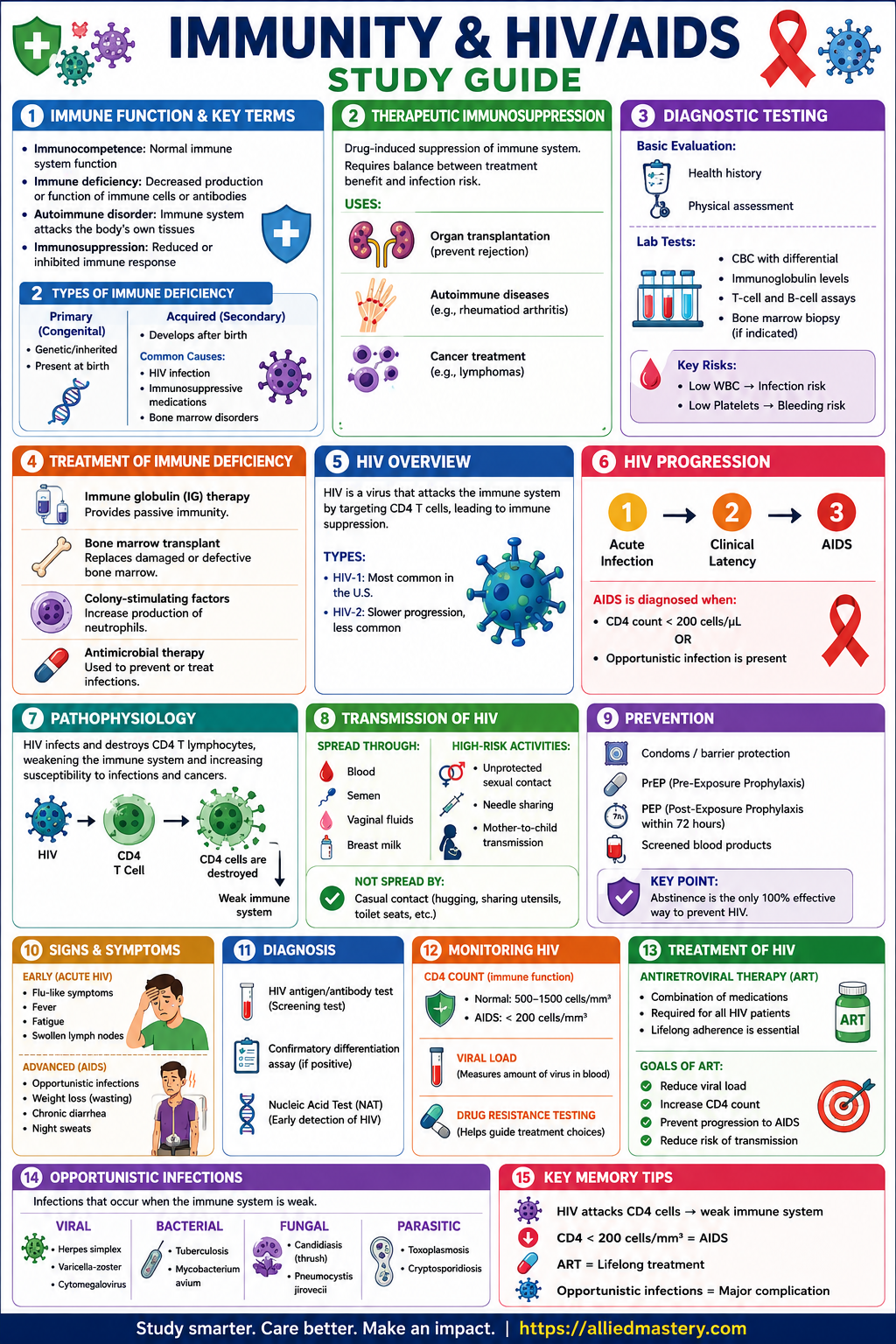
Immunity & HIV/AIDS Study Guide
🧠 Immunity & HIV/AIDS Study Guide
📌 1. Immune Function & Key Terms
- Immunocompetence: Normal immune system function
- Immune deficiency: Decreased production/function of immune cells or antibodies
- Autoimmune disorder: Immune system attacks the body’s own tissues
- Immunosuppression: Reduced or inhibited immune response
⚠️ 2. Immune Deficiency Conditions
Types of Immune Deficiency
Primary (Congenital)
- Genetic/inherited
- Present at birth
Acquired (Secondary)
- Develops after birth
Common Causes:
- HIV infection
- Immunosuppressive medications
- Bone marrow disorders
💊 3. Therapeutic Immunosuppression
- Drug-induced suppression of immune system
- Requires balance between treatment and infection risk
Common Uses:
- Organ transplantation
- Autoimmune diseases (e.g., rheumatoid arthritis)
- Cancer treatment (e.g., lymphomas)
🧪 4. Diagnostic Testing
Basic Evaluation:
- Health history
- Physical assessment
Lab Tests:
- CBC with differential
- Immunoglobulin levels
- T-cell and B-cell assays
- Bone marrow biopsy (if indicated)
💉 5. Treatment of Immune Deficiency
- Immune globulin (IG) therapy
- Bone marrow transplant
- Colony-stimulating factors (increase neutrophils)
- Antimicrobial therapy
🦠 6. HIV Overview
- Virus that attacks the immune system
- Targets CD4 T cells
- Leads to immune suppression
Types:
- HIV-1 (most common in U.S.)
- HIV-2 (slower progression, less common)
🔄 7. HIV Progression
- Acute infection
- Clinical latency
- AIDS
AIDS Diagnosis:
- CD4 count < 200 cells/µL
- OR presence of opportunistic infection
🔬 8. Pathophysiology
- HIV infects and destroys CD4 T lymphocytes
- Weakens immune system
- Increases susceptibility to infections
🚨 9. Transmission of HIV
Spread Through:
- Blood
- Semen
- Vaginal fluids
- Breast milk
High-Risk Activities:
- Unprotected sexual contact
- Needle sharing
- Maternal-fetal transmission
Not Spread By:
- Casual contact
🛑 10. Prevention
- Safe sex (condoms/barriers)
- PrEP (pre-exposure prophylaxis)
- PEP (post-exposure prophylaxis within 72 hrs)
- Screened blood products
Key Point: Abstinence is the only 100% effective prevention
🧍♂️ 11. Signs & Symptoms
Early (Acute HIV):
- Flu-like illness
- Fever
- Fatigue
- Swollen lymph nodes
Advanced (AIDS):
- Opportunistic infections
- Weight loss (wasting)
- Chronic diarrhea
- Night sweats
🧫 12. Diagnosis
- HIV antigen/antibody test
- Confirmatory differentiation assay
- Nucleic acid testing (NAT)
📊 13. Monitoring HIV
-
CD4 Count
- Normal: 500–1500 cells/mm³
- AIDS: < 200 cells/mm³
-
Viral Load
- Measures amount of virus
-
Drug resistance testing
💊 14. Treatment of HIV
Antiretroviral Therapy (ART)
- Combination drug therapy
- Required for all HIV patients
- Lifelong adherence
Goals:
- Reduce viral load
- Increase CD4 count
- Prevent progression to AIDS
- Reduce transmission
⚠️ 15. Opportunistic Infections
Occur due to weakened immune system
Viral:
- Herpes simplex
- Varicella-zoster
- Cytomegalovirus
Bacterial:
- Tuberculosis
- Mycobacterium avium
Fungal:
- Candidiasis (thrush)
- Pneumocystis jirovecii
Parasitic:
- Toxoplasmosis
- Cryptosporidiosis
🧠 16. Key Memory Tips
- HIV attacks CD4 cells → weak immune system
- CD4 < 200 = AIDS
- ART = lifelong treatment
- Opportunistic infections = major complication
Ready to Go Deeper?
This is just a sample of what Allied Mastery offers. Sign up to unlock our full library, create custom quizzes, track your performance, and more.