EMT
Roles and Responsibilities of an EMT
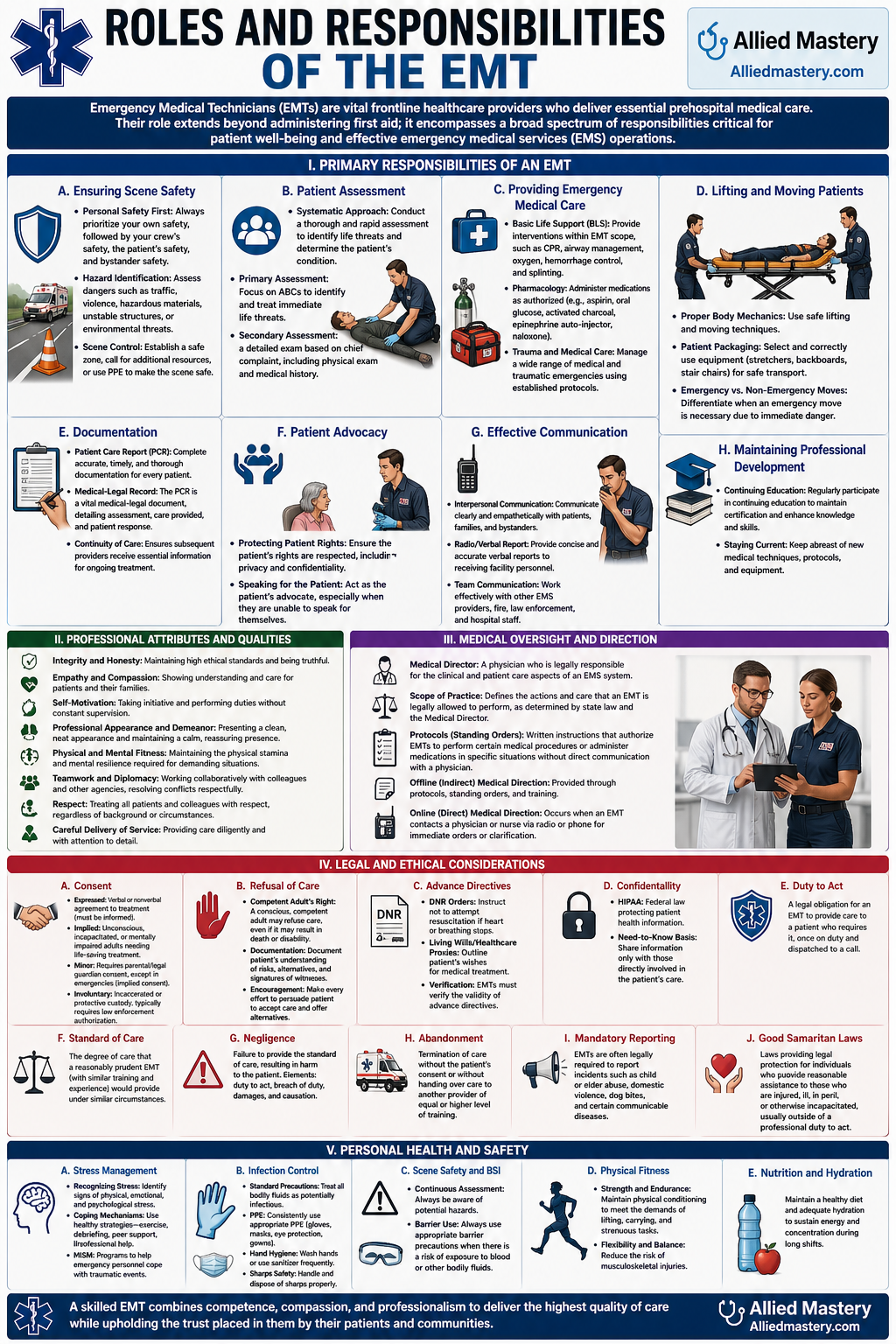
Roles and Responsibilities of the EMT
Emergency Medical Technicians (EMTs) are vital frontline healthcare providers who deliver essential prehospital medical care. Their role extends beyond administering first aid; it encompasses a broad spectrum of responsibilities critical for patient well-being and effective emergency medical services (EMS) operations.
I. Primary Responsibilities of an EMT
An EMT's responsibilities are multifaceted and require a combination of medical knowledge, technical skills, and professional conduct.
A. Ensuring Scene Safety
- Personal Safety First: Always prioritize your own safety, followed by your crew's safety, the patient's safety, and finally, the bystander's safety.
- Hazard Identification: Rapidly assess for potential dangers such as traffic, violence, hazardous materials, unstable structures, or environmental threats.
- Scene Control: Implement measures to make the scene safe, which may include establishing a safe zone, calling for additional resources (e.g., law enforcement, fire department), or using personal protective equipment (PPE).
B. Patient Assessment
- Systematic Approach: Conduct a thorough and rapid assessment to identify life threats and determine the patient's condition.
- Primary Assessment: Focus on airway, breathing, and circulation (ABCs) to identify and treat immediate life threats.
- Secondary Assessment: Perform a more detailed examination based on the patient's chief complaint, including a physical exam and medical history.
C. Providing Emergency Medical Care
- Basic Life Support (BLS): Administer interventions within the EMT scope of practice, such as CPR, airway management, oxygen administration, hemorrhage control, and splinting.
- Pharmacology: Administer specific medications as authorized by medical direction (e.g., aspirin, oral glucose, activated charcoal, epinephrine auto-injector, naloxone).
- Trauma and Medical Care: Manage a wide range of medical and traumatic emergencies using established protocols.
D. Lifting and Moving Patients
- Proper Body Mechanics: Utilize safe lifting and moving techniques to prevent injury to yourself, your crew, and the patient.
- Patient Packaging: Select and correctly use appropriate equipment (e.g., stretchers, backboards, stair chairs) for safe and efficient patient transport.
- Emergency vs. Non-Emergency Moves: Differentiate when an emergency move is necessary due to immediate danger.
E. Documentation
- Patient Care Report (PCR): Complete accurate, timely, and thorough documentation for every patient contact.
- Medical-Legal Record: The PCR serves as a vital medical-legal document, detailing assessment findings, care provided, and patient response.
- Continuity of Care: Ensures that subsequent healthcare providers receive essential information for ongoing treatment.
F. Patient Advocacy
- Protecting Patient Rights: Ensure the patient's rights are respected, including privacy and confidentiality.
- Speaking for the Patient: Act as the patient's advocate, especially when they are unable to speak for themselves.
G. Effective Communication
- Interpersonal Communication: Communicate clearly and empathetically with patients, families, and bystanders.
- Radio/Verbal Report: Provide concise and accurate verbal reports to receiving facility personnel.
- Team Communication: Work effectively with other EMS providers, fire, law enforcement, and hospital staff.
H. Maintaining Professional Development
- Continuing Education: Regularly participate in continuing education to maintain certification and enhance knowledge and skills.
- Staying Current: Keep abreast of new medical techniques, protocols, and equipment.
II. Professional Attributes and Qualities
Beyond medical skills, effective EMTs possess a strong set of professional characteristics.
- Integrity and Honesty: Maintaining high ethical standards and being truthful.
- Empathy and Compassion: Showing understanding and care for patients and their families.
- Self-Motivation: Taking initiative and performing duties without constant supervision.
- Professional Appearance and Demeanor: Presenting a clean, neat appearance and maintaining a calm, reassuring presence.
- Physical and Mental Fitness: Maintaining the physical stamina and mental resilience required for demanding situations.
- Teamwork and Diplomacy: Working collaboratively with colleagues and other agencies, resolving conflicts respectfully.
- Respect: Treating all patients and colleagues with respect, regardless of background or circumstances.
- Careful Delivery of Service: Providing care diligently and with attention to detail.
III. Medical Oversight and Direction
EMTs operate under the licensure and guidance of a physician Medical Director.
- Medical Director: A physician who is legally responsible for the clinical and patient care aspects of an EMS system.
- Scope of Practice: Defines the actions and care that an EMT is legally allowed to perform, as determined by state law and the Medical Director.
- Protocols (Standing Orders): Written instructions that authorize EMTs to perform certain medical procedures or administer medications in specific situations without direct communication with a physician.
- Offline (Indirect) Medical Direction: Provided through protocols, standing orders, and training.
- Online (Direct) Medical Direction: Occurs when an EMT contacts a physician or nurse via radio or phone for immediate orders or clarification.
IV. Legal and Ethical Considerations
EMTs must adhere to strict legal and ethical guidelines to protect both themselves and their patients.
A. Consent
- Expressed Consent: The patient verbally or nonverbally agrees to treatment. Must be informed consent (patient understands nature of treatment, risks, benefits).
- Implied Consent: Assumed in unconscious, incapacitated, or mentally impaired adults who would otherwise consent to life-saving treatment.
- Minor Consent: Typically requires parental or legal guardian consent, except in cases of emancipation or life-threatening emergencies (implied consent).
- Involuntary Consent: Applied to patients who are incarcerated or in protective custody; usually requires law enforcement authorization.
B. Refusal of Care
- Competent Adult's Right: A conscious, mentally competent adult has the right to refuse care, even if it may result in death or disability.
- Documentation: Thorough documentation is crucial, including the patient's understanding of risks, alternatives, and signatures of witnesses.
- Encouragement: EMTs should make every effort to persuade the patient to accept care and offer alternative solutions.
C. Advance Directives
- Do Not Resuscitate (DNR) Orders: Legal documents instructing medical personnel not to attempt resuscitation (CPR) if the patient's heart or breathing stops.
- Living Wills and Healthcare Proxies: Other legal documents that outline a patient's wishes regarding medical treatment.
- Verification: EMTs must verify the validity of advance directives.
D. Confidentiality
- HIPAA (Health Insurance Portability and Accountability Act): Federal law protecting patient health information.
- Need-to-Know Basis: Information can only be shared with those directly involved in the patient's care.
E. Duty to Act
- A legal obligation for an EMT to provide care to a patient who requires it, once on duty and dispatched to a call.
F. Standard of Care
- The degree of care that a reasonably prudent EMT (with similar training and experience) would provide under similar circumstances.
G. Negligence
- Failure to provide the standard of care, resulting in harm to the patient. Elements include: duty to act, breach of duty, damages, and causation.
H. Abandonment
- Termination of care without the patient's consent or without handing over care to another healthcare professional of equal or higher level of training.
I. Mandatory Reporting Requirements
- EMTs are often legally required to report certain incidents, such as child or elder abuse, domestic violence, dog bites, and certain communicable diseases.
J. Good Samaritan Laws
- Laws providing legal protection for individuals who provide reasonable assistance to those who are injured, ill, in peril, or otherwise incapacitated, usually outside of a professional duty to act.
V. Personal Health and Safety
An EMT's ability to perform their duties effectively relies on their own well-being.
A. Stress Management
- Recognizing Stress: Identify signs of physical, emotional, and psychological stress.
- Coping Mechanisms: Utilize healthy coping strategies such as exercise, debriefing, talking with peers, and seeking professional help.
- Critical Incident Stress Management (CISM): Programs designed to help emergency personnel cope with traumatic events.
B. Infection Control
- Standard Precautions (Universal Precautions): Treat all bodily fluids as potentially infectious.
- Personal Protective Equipment (PPE): Consistently use appropriate PPE (gloves, masks, eye protection, gowns) to prevent exposure.
- Hand Hygiene: Frequent and proper hand washing or use of alcohol-based hand sanitizer.
- Sharps Safety: Proper handling and disposal of needles and other sharp objects.
C. Scene Safety and BSI (Body Substance Isolation)
- Continuous Assessment: Always maintain awareness of potential hazards.
- Barrier Use: Always use appropriate barrier precautions when there is a risk of exposure to blood or other bodily fluids.
D. Physical Fitness
- Strength and Endurance: Maintain physical conditioning to meet the demands of lifting, carrying, and performing strenuous tasks.
- Flexibility and Balance: Reduce the risk of musculoskeletal injuries.
E. Nutrition and Hydration
- Maintain a healthy diet and adequate hydration to sustain energy and concentration during long shifts. This comprehensive understanding forms the foundation for effective and responsible EMS practice.
Ready to Go Deeper?
This is just a sample of what Allied Mastery offers. Sign up to unlock our full library, create custom quizzes, track your performance, and more.